Sheriff Labrador Safety Games
- 4.7
- Rating
- 5.00M
- Installs
- Free
- Price

 Analysis by App-foxy
I spent time with Sheriff Labrador Safety Tips2 as a children’s educational game from BabyBus, and my first impression was that it is trying to teach safety through a character-led world rather than through dry instructions. That matters with younger players: a child is more likely to remember a short story, cartoon moment, or interactive challenge than a list of rules read aloud by an adult. The app brings those formats together, so it feels closer to a small safety-themed entertainment hub than to a single lesson.
It is free to start and carries an Everyone age rating, which makes it easy for families to consider. The game has reached over a million installs and holds a 4.7 average from around 6.8 thousand ratings, a strong sign that many families find the presentation approachable. I would still treat those figures as a starting point, not a substitute for checking whether its style suits your child. Safety learning works best when an adult connects the game’s situations with real life.
What the safety lessons feel like in everyday use
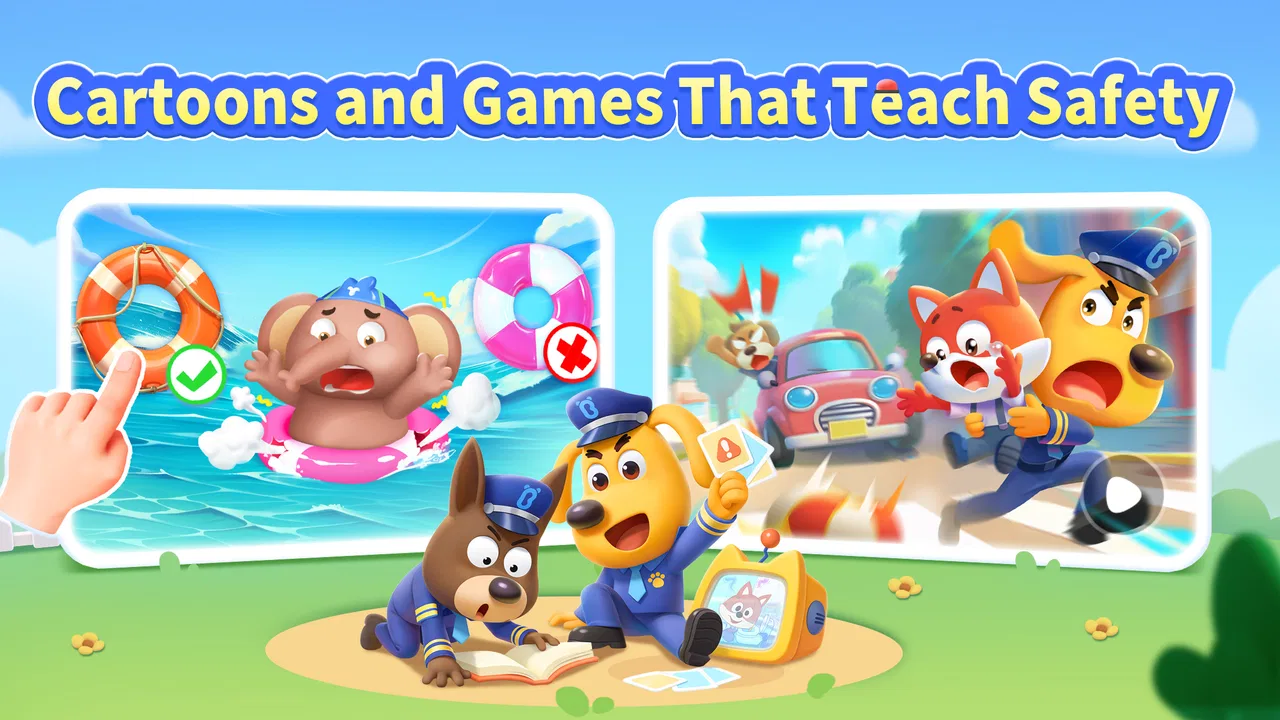
The central appeal is the mix of safety games, cartoons, and stories. In my experience, this combination gives parents several ways to introduce the same general subject. A child who loses interest in a quiz may engage with a cartoon, while another child may prefer tapping through a situation and seeing what happens next. That variety is more useful than simply adding more levels of one repeated activity.
You May Also Like

 Blood Strike: 2.5 Anniversary
Blood Strike’s Loadouts Turn Every Drop Into a Tactical Gamble
A close look at Blood Strike’s custom loadouts: how fast access to signature weapons reshapes its battle royale rhythm, rewards preparation, and narrows the gap between fights.

 Pandora - Music & Podcasts
Pandora’s Music Is Easy to Start, but Harder to Recover
Pandora’s strength is its low-effort path from a seed to a station. Its weak spot is how much confidence it asks you to place in connection, setup, and quiet recovery.

 8 Ball Pool
 Is Built on Rivalries, Rematches, and Routine
A close look at the rivalries, rematches, shared routines, and unanswered safety questions that turn a quick pool match into a persistent mobile community.

 Samsung Music
’s Quiet Strength Is Playing What You Already Own
Its reach comes less from spectacle than from dependable access to a personal library. That simplicity is both the app’s strongest retention engine and its ceiling.

 AccuWeather: Weather Radar
AccuWeather Review: A Quick, Clear Forecast for Everyday Decisions
For everyday plans, the best forecast is the one you can understand quickly. AccuWeather makes rain timing, radar, and local conditions easy to act on, with a few trade-offs.

 Hill Climb Racing
Why Hill Climb Racing Still Turns Crashes Into One More Run
A tiny car, a bumpy hill and one more upgrade: Hill Climb Racing keeps resurfacing because its simple chaos makes every near-miss feel personal.
More From Our News Desk



I can easily imagine using it during a quiet afternoon before a family outing. Rather than opening the game and leaving a child alone with it for a long session, I would choose one short activity, ask what the character should do, and then relate the answer to the planned trip. If the family is heading outside, the conversation could move from the game’s safety theme to staying close, noticing surroundings, or asking a trusted adult for help. The app becomes a prompt for discussion instead of pretending that screen practice replaces supervision.
That is also where Sheriff Labrador’s role helps. A recognizable guide can make advice feel less like correction from a parent. The character gives the material a friendly identity, which may reduce the resistance some children show when adults repeat safety instructions. I would not expect every lesson to hold a child’s attention equally, but the character-based approach is a sensible fit for early learning.
The educational category is important here. This is not simply a cartoon collection with a safety label added afterward; its purpose is to make safety ideas understandable through play and viewing. The best way to use it is to pause occasionally and ask the child to explain the choice in their own words. That small step reveals whether they understood the situation or merely tapped through it.
A better routine than handing over the phone
One practical tip is to use the app as a conversation starter in small portions. I would avoid presenting it as a reward that a child must rush through, because speed can turn a safety lesson into another activity to complete. Instead, I would let the child show a parent a favorite story or game, then ask which part seemed important and what they would do outside the app.
This approach also helps with age differences between siblings. A younger child can watch or interact with the simpler material, while an older sibling can explain why a decision is safer. The adult can adjust the conversation without needing a separate app for every child. That flexibility is one of the stronger reasons to choose this title over a narrowly focused safety worksheet.
There is a trade-off, though. A broad collection can feel less structured than a dedicated course. If you want a clear sequence that moves from one carefully defined lesson to the next, you may need to create that order yourself. I would make a small routine, such as one story followed by one discussion, rather than expecting the app to provide a complete family safety curriculum.
How it compares with ordinary alternatives
Compared with a standard children’s video service, the educational value is more focused because the material is built around safety and the Sheriff Labrador setting. A general video platform may offer more variety, but it also puts the parent in charge of finding suitable clips and keeping the child away from unrelated recommendations. This app is more convenient when the goal is specifically safety-themed entertainment.
Compared with a printed activity book, it offers movement, sound, and character presentation, which can be more inviting for a child who does not enjoy worksheets. The book still has advantages: it is easier to discuss slowly, does not depend on a device, and gives parents a clearer view of what the child is doing. For travel or waiting rooms, the app is more portable; for a calm lesson at a table, paper may be better.
Compared with a dedicated emergency-learning tool for older children, Sheriff Labrador Safety Tips2 is likely to feel friendlier and less intimidating, but it is not the choice I would make when a child needs detailed, practical training for a specific situation. Its strength is early engagement and repeated exposure to simple ideas, not replacing instruction from a parent, teacher, or qualified professional.
Spending, progress, and the fairness question
The game is free, but it includes optional purchases priced from $1.99 to $29.99 per item. That range is the most important spending detail for parents to understand before handing over a device. I would set up purchase controls in the relevant app-store settings and make the rule clear: the child can play, but purchases require an adult’s permission. That is useful even when a game is educational, because a child may not understand that a tap can lead to a charge.
I appreciate that the starting price is not a barrier to trying the experience. A parent can first see whether the child responds to the characters and safety themes before deciding whether any optional content is worthwhile. At the same time, the presence of higher-priced individual items means I would not describe the free entry as the whole financial picture. The sensible test is whether the unpaid material already supports the family’s intended use.
I paid close attention to how spending might affect the feeling of progress. For a safety game, fairness matters differently than it does in a competitive action title. A purchase should not make a child feel that safety knowledge is locked behind a payment or that completing more content is the same as learning better. I would judge optional content by whether it adds useful variety for the child, not by whether it creates pressure to keep buying.
Parents should also watch for a familiar pattern: a child may ask for more content simply because a character or story is appealing. That is normal, but it is not evidence that the extra item is educationally necessary. My advice is to set a fixed boundary before play, such as choosing from the available material without making purchase requests during the session. This keeps the focus on the lesson and makes the spending decision an adult choice.
Does progress create pressure?
The app’s mixture of games, cartoons, and stories can encourage a child to keep exploring, which is helpful when it leads to repetition of safety ideas. It can also make screen time feel open-ended. I would use a timer or a simple stopping point, especially for children who find it difficult to switch activities. Ending after a story or a completed game gives the session a natural finish.
Another useful habit is to ask the child to teach one safety idea back to you before closing the app. If they can explain it, the session had a clear purpose. If they cannot, I would not respond by pushing them through more content. I would revisit the situation in ordinary language and try again another day. This prevents progress from becoming a race through material the child has not absorbed.
For families looking for measurable academic progress, this may feel limited. Safety understanding is not always visible through a score, and a child’s enthusiasm does not prove retention. I see that as a reason for adult involvement, not necessarily a flaw. The game can provide examples and repetition, while the parent supplies context, correction, and judgment.
Fairness for different kinds of players
Fairness also includes whether the app respects different play styles. A child who enjoys stories may get more from the viewing side, while a child who likes interaction may prefer the games. That choice is positive because it lets the lesson meet the child where they are. However, I would avoid assuming that every child will find the same activity equally accessible or engaging. If a particular format frustrates them, switching to another part of the app may work better than insisting they finish it.
I would skip this game for a family that wants a completely offline, distraction-free learning tool, or for an older child who needs detailed explanations rather than cartoon-led guidance. I would also be cautious if the child tends to make accidental purchases or becomes upset when a session ends. In those cases, a supervised alternative with a fixed amount of material may be a better fit.
What parents should check before settling into a routine
The developer is BabyBus, a name associated here with a child-focused presentation, but the developer name alone should not decide whether the app belongs on your child’s device. I would first open it together, look at how the child navigates, and decide whether the tone feels comfortable. The Everyone rating is reassuring as a broad age classification, yet parents still know their child’s sensitivities and attention span better than any label.
The current version is 8.73.40.30 and the game requires Android 6.0 or later. That makes device compatibility an early practical check. If you are preparing it for a child’s tablet, I would install and test it before a trip or a planned learning session rather than discovering a compatibility or navigation problem at the last minute.
It is also worth deciding who controls the device. On a shared family phone, the child may encounter notifications, unrelated apps, or purchase prompts outside the game itself. A dedicated child profile or supervised tablet can make the experience calmer. I would not treat the game as a substitute for broader device controls; the safest setup combines the app with the operating system’s parental tools.
Another question is whether the stories and games fit your family’s language and communication needs. The value of a safety lesson depends on the child understanding the situation, not merely recognizing the character. If your child needs an adult to translate, explain, or repeat an idea, plan to stay nearby. That is not a weakness unique to this game; it is simply a realistic part of using screen-based educational content with young children.
I would also keep expectations modest about transfer to real life. A child may choose the correct response inside a game and still forget it when excited, frightened, or distracted outdoors. That is why I would repeat the same ideas during ordinary routines: crossing a street, visiting a crowded place, meeting unfamiliar people, or preparing for an outing. The game is most useful when it reinforces those conversations rather than standing alone.
Small details that improve the experience
My first practical recommendation is to preview the available material with the child, then create a short personal sequence. For example, begin with a story, move to an interactive activity, and finish by asking the child to describe the safest choice. This turns a large collection into a manageable routine and reduces random tapping.
My second recommendation is to separate entertainment time from teaching time. Some sessions can simply be enjoyable, while others can include questions and discussion. If every minute becomes a test, the child may resist the app. If every minute is passive viewing, the educational opportunity becomes weaker. Alternating between the two gives the game room to be fun without losing its purpose.
My third recommendation concerns purchases: make the spending rule visible and consistent before play begins. Because individual items can range from a small amount to a noticeably higher one, I would never rely on a child understanding the difference between free and paid content. A parent-controlled decision keeps the experience fair and prevents an attractive character or story from turning into an impulsive purchase.
A fourth insight is to use repetition across settings. After a game session at home, bring one idea into a real errand or walk. Ask the child what Sheriff Labrador might suggest, then discuss the real answer together. This makes the character memorable while gently moving the child from pretend situations to practical awareness.
My trust verdict for families
After reviewing Sheriff Labrador Safety Tips2, I see it as a useful introductory companion for families who want safety topics presented in a friendly, child-sized way. Its mixture of games, cartoons, and stories gives parents more than one route into the subject, and the Sheriff Labrador identity makes the material easier to approach than a stern instructional format. The free starting point also makes it reasonable to try before considering any optional purchase.
My confidence is strongest when the app is used together with an adult. I would not install it and assume the lessons will automatically become real-world habits. The best results come from short sessions, simple follow-up questions, and examples drawn from the child’s own day. That extra involvement is where the educational value becomes more personal and useful.
Spending deserves a deliberate approach. Optional purchases from $1.99 to $29.99 per item mean families should use purchase protections and decide whether extra material genuinely adds value. I would not let a child’s desire to unlock more stories determine the budget, and I would not confuse a larger collection with deeper learning.
Overall, I would recommend it to parents of younger children who want an approachable safety-themed game and are comfortable supervising screen use. I would choose a different option for children who need advanced instruction, a tightly sequenced course, or a completely offline experience. For the right family, though, the strongest feature is its ability to turn safety conversations into shared moments rather than solitary screen time.
As a free educational game rated for Everyone, it is easy to explore, and its 1M+ install presence suggests it has found a substantial audience. My final advice is simple: try one short session with your child, observe whether the stories and games invite conversation, and keep the purchase controls in adult hands. If the child can carry one safety idea from the screen into daily life, the app is doing something worthwhile.
FAQs for Sheriff Labrador Safety Games
01What is Sheriff Labrador Safety Tips2 and what does it offer?
Sheriff Labrador Safety Tips2 is an educational app designed to teach children important safety tips through interactive stories and engaging activities. The app features Sheriff Labrador, a friendly canine character who guides users through various safety scenarios. It's an excellent tool for parents and educators to introduce kids to essential safety concepts in a fun way.
02Is Sheriff Labrador Safety Tips2 suitable for all age groups?
Sheriff Labrador Safety Tips2 is primarily designed for children aged 4 to 10. It uses simple language and colorful animations to ensure that young users can easily understand the lessons. However, parents and older siblings can also participate, making it a family-friendly educational tool that reinforces safety awareness for everyone involved.
03Does Sheriff Labrador Safety Tips2 require an internet connection to function?
No, Sheriff Labrador Safety Tips2 can be used offline once it's fully downloaded and installed on your device. This offline functionality makes it convenient for parents to use the app on-the-go, without worrying about data usage or internet availability, especially during travel or in areas with limited connectivity.
04Are there any in-app purchases or advertisements in Sheriff Labrador Safety Tips2?
Sheriff Labrador Safety Tips2 offers a safe environment for children by being free of advertisements. While the app may include optional in-app purchases for additional content or features, these are clearly marked and can be disabled through parental controls to ensure a distraction-free experience for young users.
05How does Sheriff Labrador Safety Tips2 ensure user privacy and data security?
Sheriff Labrador Safety Tips2 prioritizes user privacy by adhering to strict data protection policies. The app collects minimal data, solely for improving user experience, and does not share any personal information with third parties. Parents can be assured that their children's interactions within the app are secure and private.
Pros
- Engaging and educational content for kids.
- Colorful graphics keep children entertained.
- Interactive lessons enhance learning.
- User-friendly interface for easy navigation.
- Regular updates with new safety tips.
Cons
- Limited content variety for older kids.
- Requires internet for some features.
- In-app purchases can be confusing.
- Occasional ads disrupt user experience.
- Some tips may feel repetitive.

Sheriff Labrador Safety Games
Gallery